
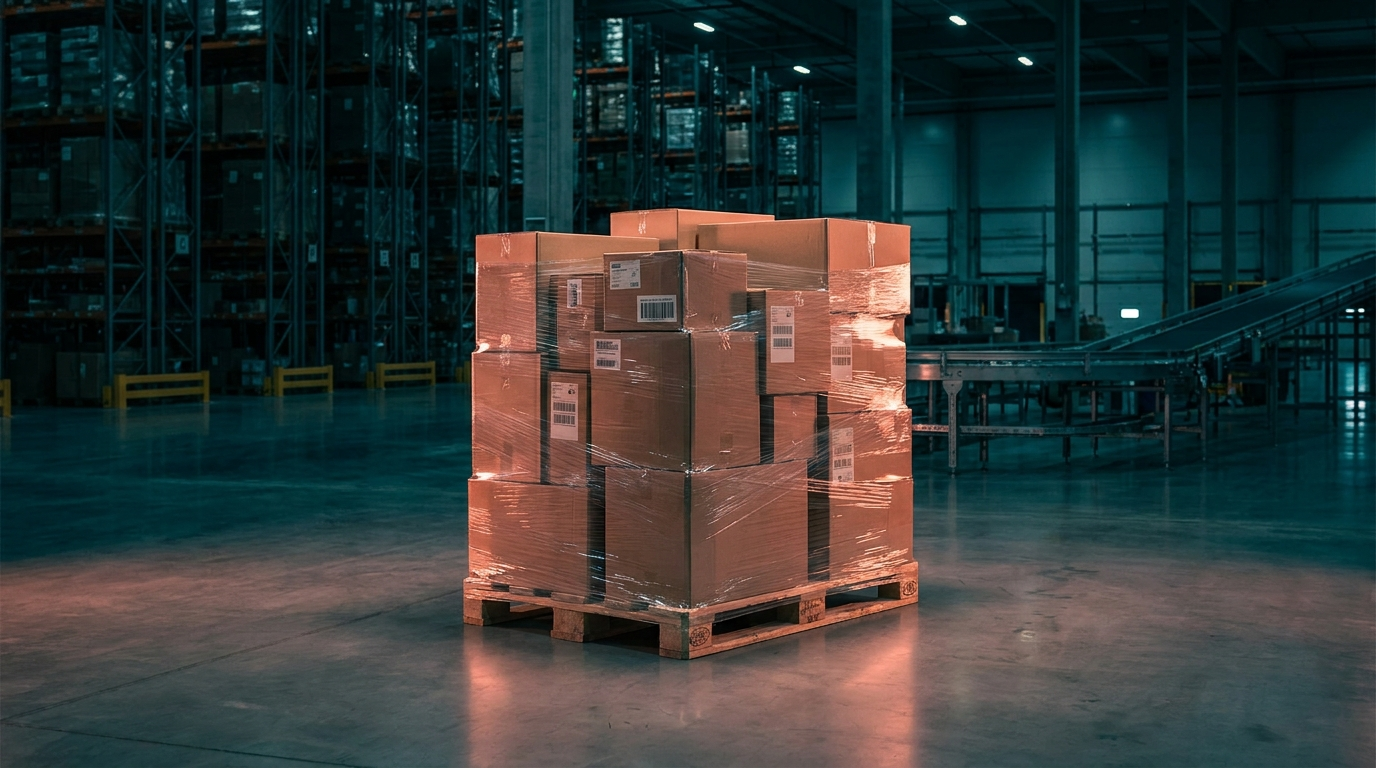
What’s Really Inside an Amazon Returns Pallet
Short answer: a bell curve. Every Amazon returns pallet is a distribution — some like-new giftable items, a wide middle of open-box goods, and a tail of genuinely broken stuff. Buyers who expect the curve profit; buyers who expect 100% resale get disappointed.
The typical breakdown
- 30–45% like-new / unopened: gift returns, wrong-size, buyer remorse. Sells at 60–80% of retail.
- 35–45% open-box working: tested, used once, repackaged. Sells at 40–60% of retail with honest grading.
- 10–20% incomplete or defective: missing accessories, cosmetic damage, or dead. Bundle for parts or part out.
Why the curve exists
Amazon’s return flow mixes every reason a customer clicks “return” — and most reasons have nothing to do with the product being broken. That is the entire arbitrage: retail treats it all as distressed; resale reality is much kinder.
How to buy the curve profitably
Price the pallet assuming the middle of the curve, sort within 48 hours, and sell each tier where it belongs — like-new online, open-box local, parts in lots. Our guide to resale channels maps each tier to a venue.

Related posts
The two most asked-about store channels, compared honestly — because they behave differently at the bin and on the listing page. Target loads: brand equity... Continue reading

Pallet buying looks like gambling until you learn the three numbers. Then it looks like arithmetic. 1. Cost per sellable unit Pallet price ÷ (piece... Continue reading

We see the same avoidable mistakes across first-time buyers. Here are the seven, with fixes. 1. Buying salvage priced as returns If condition is not... Continue reading

Mystery boxes get dismissed as a gimmick and hyped as free money. Both takes are wrong — they are an unmanifested product with specific math... Continue reading

“Free shipping” sounds like marketing. On freight-class goods it is a structural margin change. Here is the actual math. What freight really costs LTL pallet... Continue reading
Add comment